
La no ficción de la que no pude dejar de hablar
 +5 más
Libros que te llenan de datos que tienes que contarle a la próxima persona que veas. Avisado estás, y también todos los que te conocen.
Los lectores deciden qué hay en esta pila de libros. —

Apilada por Drayfus · 20 visitas · Actualizada hace 3 meses
Los 9 libros de esta pila
-
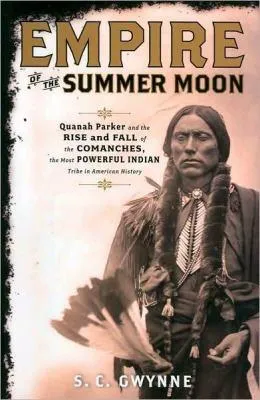
Empire of the Summer Moon EN
S. C. Gwynne · 2010
De momento solo tenemos la sinopsis en inglés.
In the tradition of Bury My Heart at Wounded Knee, a stunningly vivid historical account of the forty-year battle between Comanche Indians and white settlers for control of the American West, centering on Quanah, the greatest Comanche chief of them all. Empire of the Summer Moon spans two astonishing stories. The first traces the rise and fall of the Comanches, the most powerful Indian tribe in American history. The second is the epic saga of the pioneer woman Cynthia Ann Parker and her mixed-blood son Quanah, who became the last and greatest chief of the Comanches. Although readers may be more familiar with the tribal names Apache and Sioux, it was in fact the legendary fighting ability of the Comanches that determined just how and when the American West opened up. Comanche boys became adept bareback riders by age six; full Comanche braves were considered the best horsemen who ever rode. They were so masterful at war and so skillful with their arrows and lances that they stopped the northern drive of colonial Spain from Mexico and halted the French expansion westward from Louisiana. White settlers arriving in Texas from the eastern United States were surprised to find the frontier being rolled backward by Comanches incensed by the invasion of their tribal lands. Against this backdrop Gwynne presents the compelling drama of Cynthia Ann Parker, a nine-year-old girl who was kidnapped by Comanches in 1836. She grew to love her captors and became infamous as the "White Squaw" who refused to return until her tragic capture by Texas Rangers in 1860. More famous still was her son Quanah, a warrior who was never defeated and whose guerrilla wars in the Texas Panhandle made him a legend. S. C. Gwynne's account of these events is meticulously researched, intellectually provocative, and, above all, thrillingly told.
-
La vida inmortal de Henrietta Lacks
Rebecca Skloot · 2019
Se llamaba Henrietta Lacks. Era una campesina cuyas células, que fueron tomadas sin su conocimiento, siguen vivas a pesar de que ella lleva muerta más de sesenta años y se han convertido en una de las herramientas más importantes de la medicina: fueron vitales para el desarrollo de la vacuna contra la polio, desvelaron secretos sobre el cáncer o los virus, ayudaron a realizar importantes avances como la fertilización in vitro o la clonación y han sido compradas y vendidas por laboratorios de todo el mundo, generando grandes beneficios económicos a la industria farmacéutica. Sin embargo, su familia, que no puede permitirse pagar un seguro médico, vivió cincuenta años sin conocer la historia de Henrietta, y todavía hoy lucha por defender el legado de su madre y abuela. La periodista y escritora científica Rebecca Skloot realiza una apasionante labor de investigación que nos transporta desde la pequeña y decadente ciudad natal de Henrietta, en los años cincuenta, hasta el Baltimore actual, en un viaje extraordinario que mezcla las vivencias de la actual familia Lacks con la historia de unas células que todavía hoy son un misterio de la biología.
-
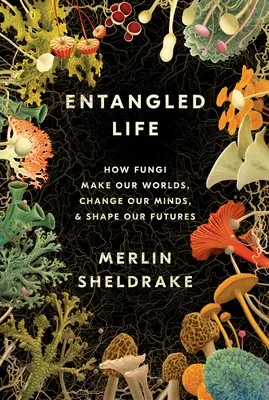
Entangled Life EN
Merlin Sheldrake · 2020
De momento solo tenemos la sinopsis en inglés.
The smash-hit Sunday Times bestseller now illustrated with over 100 spectacular full-colour images, showcasing this wondrous and wildly various lifeform as never before 'Astonishing ... it seems somehow to tip the natural world upside down' Observer 'Completely mind-blowing ... reads like an adventure story' Sunday Times *WINNER OF THE ROYAL SOCIETY BOOK PRIZE 2021* *WINNER OF THE WAINWRIGHT PRIZE FOR CONSERVATION WRTITING 2021* *SHORTLISTED FOR THE RATHBONES FOLIO PRIZE 2021* *SHORTLISTED FOR THE BRITISH BOOK AWARDS BOOK OF THE YEAR 2021* The more we learn about fungi, the less makes sense without them. They can change our minds, heal our bodies and even help us avoid environmental disaster; they are metabolic masters, earth-makers and key players in most of nature's processes. In Entangled Life, Merlin Sheldrake takes us on a mind-altering journey into their spectacular world, and reveals how these extraordinary organisms transform our understanding of our planet and life itself. 'Dazzling, vibrant, vision-changing' Robert Macfarlane 'Urgent, astounding and necessary' Helen Macdonald 'Gorgeous!' Margaret Atwood (on Twitter) 'Wonderful' Nigella Lawson 'A magical writer' Russell Brand 'This book is like one surprise after another' David Byrne 'Uplifting' Jeanette Winterson * A Sunday Times, Daily Telegraph, New Statesman, The Times, Evening Standard, Mail on Sunday, BBC Science Focus and Time Book of the Year *
-
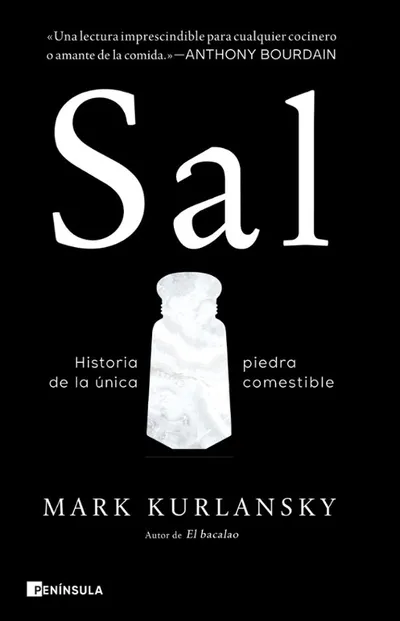
Sal
Mark Kurlansky · 2002
Desde la Antigüedad, la sal ha sido una de las materias más valiosas para el ser humano. Homero la consideraba una sustancia divina y Platón la describía como especialmente apreciada por los dioses. Hoy, sin embargo, solo se la concibe como un ingrediente esencial en la gastronomía. Su sentido y funciones originales han quedado difuminadas. Pocos elementos han alterado tanto el curso de la historia como esta piedra: funcionó como moneda de cambio para financiar tanto reliquias históricas como imperios que iban desde Europa hasta Asia. Las técnicas de extracción de la sal impulsaron métodos de perforación que más tarde se aplicarían en la industria del petróleo, actuó como el germen de conflictos bélicos y redefinió rutas comerciales que conectaron desiertos remotos y océanos hasta entonces desconocidos. Asimismo, su capacidad para conservar y preservar la vida la convirtió en un símbolo religioso universal. Con un profundo rigor científico, Mark Kurlansky combina en Sal una miríada de datos históricos, sociopolíticos, culturales y gastronómicos que, en conjunto, ponen de relieve el carácter caleidoscópico de la sal y su impacto en el devenir de la civilización.
-
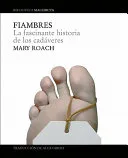
Fiambres
Mary Roach · 2003
Las macabras entidades que integran el dramatis personae de la última obra de Mary Roach figurarían, sin lugar a dudas, entre las más infelices que pueda concebir la fantasía si no fuera por la penosa circunstancia de que no son hijas de la imaginación. Pese al escalofrío o el desaliento que invade al delicado lector tras un primer acercamiento a tan lúgubre materia, la lectura de estas páginas acaba provocando involuntarias sonrisas y recias carcajadas. Porque Fiambres es una exploración contagiosamente alegre de las crueles diligencias practicadas con algunos de nuestros cuerpos cuando, una vez exhalado el último suspiro, los abandonamos a su suerte en los escatológicos umbrales de la tumba: cadáveres abiertos en canal y en el altar de la ciencia, difuntos que contribuyen al progreso de la medicina con los genitales perforados o los ojos extraídos, fiambres arrojados desde aviones o cosidos a balazos para verificar la eficiencia de nuevas armas, despojos crucificados como Nuestro Señor o devorados por gusanos, materia inerte que alcanza por fin la transubstanciación en forma de abono... Por muy gris que haya sido su existencia en este valle de lágrimas, cualquiera puede redimirse post mortem e incluso, con un poco de suerte, incorporarse a la grandiosa epopeya del conocimiento humano: “Un tipo de lo más normal que decide donar sus órganos puede convertirse, de repente, en un héroe”. La intrépida Mary Roach ha escrito con morbosa erudición e irreverente ingenio una obra que se adentra en el más allá para mostrarnos el lado más visible y deplorable de la otra vida. Mary Roach es periodista y licenciada en psicología. Sus artículos han sido publicados por Salon, Wired, Outside, GQ, Discover, Reader’s Digest, Vogue y New York Times Magazine. Vive y trabaja en San Francisco
-
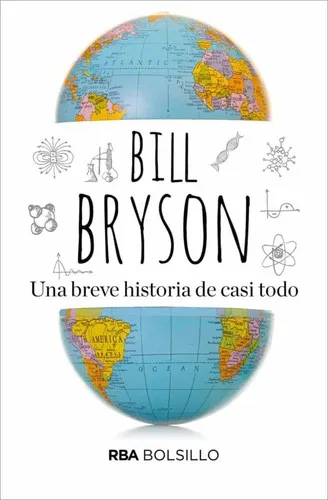
Una breve historia de casi todo
Bill Bryson · 2003
¿Puede un solo libro convertirse en la perfecta introducción para adentrarse en disciplinas tan dispares como la astronomía, la geología, la física, la química y la biología? ¿Puede un trabajo de divulgación científica ofrecer razonamientos y datos precisos, y al mismo tiempo ser tremendamente entretenido? ¿Puede una única obra narrar la historia de los grandes descubrimientos de la ciencia y contarnos también divertidas anécdotas relacionadas con estos extraordinarios logros? Con Una breve historia de casi todo, Bill Bryson nos propone un fascinante recorrido por la historia del universo que nos rodea y los conocimientos que nos han llevado a comprenderlo un poco mejor.
-
Amanecer de Todo
David Graeber · 2021
Una mirada inédita y desafiante que desmonta las principales teorías evolutivas de la historia. Durante generaciones hemos visto a nuestros antepasados más remotos como seres primitivos, ingenuos y violentos. Se nos ha dicho que solo era posible alcanzar la civilización sacrificando libertades o domesticando nuestros instintos. En este ensayo, los reconocidos antropólogos David Graeber y David Wengrow demuestran que estas concepciones, que surgieron en el siglo xviii, fueron una reacción conservadora de la sociedad europea ante las críticas de los intelectuales indígenas y que no tienen un aval antropológico y arqueológico. El amanecer de todo es una nueva historia de la humanidad , un texto combativo que transforma nuestra comprensión del pasado y abre camino para imaginar nuevas formas de organización social. Una obra monumental que cuestiona las ideas de pensadores como Jared Diamond, Francis Fukuyama y Yuval Noah Harari . Porque la suposición de que las sociedades se vuelven menos igualitarias y libres a medida que se hacen más complejas y «civilizadas» no es más que un mito. ENGLISH DESCRIPTION A groundbreaking and provocative perspective that dismantles the main evolutionary theories in history. The Dawn of Everything challenges conventional theories of human evolution , arguing that early societies were far more complex and diverse than traditionally believed. Anthropologists David Graeber and David Wengrow reveal that the idea of primitive, violent ancestors was a product of 18th-century European conservatism, shaped in response to critiques from Indigenous intellectuals. They dismantle the notion that civilization required sacrificing freedoms or suppressing instincts, showing that archaeological and anthropological evidence does not support these claims. This groundbreaking book redefines humanity's past, debunking long-held myths about the origins of cities, states, inequality, and democracy. It presents a dynamic view of prehistoric communities, demonstrating their adaptability and innovation. The Dawn of Everything challenges influential thinkers like Jared Diamond, Francis Fukuyama, and Yuval Noah Harari, arguing that the belief that societies become less equal and free as they grow more complex is nothing more than a myth.
-
Women's Work EN
Elizabeth Wayland Barber · 1994
De momento solo tenemos la sinopsis en inglés.
"A fascinating history of…[a craft] that preceded and made possible civilization itself." —New York Times Book Review New discoveries about the textile arts reveal women's unexpectedly influential role in ancient societies. Twenty thousand years ago, women were making and wearing the first clothing created from spun fibers. In fact, right up to the Industrial Revolution the fiber arts were an enormous economic force, belonging primarily to women. Despite the great toil required in making cloth and clothing, most books on ancient history and economics have no information on them. Much of this gap results from the extreme perishability of what women produced, but it seems clear that until now descriptions of prehistoric and early historic cultures have omitted virtually half the picture. Elizabeth Wayland Barber has drawn from data gathered by the most sophisticated new archaeological methods—methods she herself helped to fashion. In a "brilliantly original book" (Katha Pollitt, Washington Post Book World), she argues that women were a powerful economic force in the ancient world, with their own industry: fabric.
-
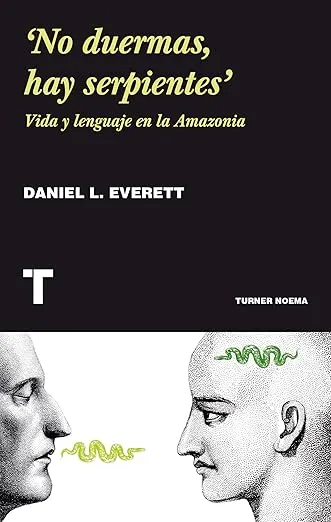
No duermas, hay serpientes : vida y lenguaje en la Amazonia
Daniel Leonard Everett · 2008
Un misionero y filólogo aterriza en mitad de la jungla amazónica con dos objetivos: va a aprender el endiablado idioma de esa tribu casi virgen, los pirahã, a los que nadie ha conseguido entender, ni enseñar otras lenguas. Y va a traducir para ellos la Biblia y a descubrirles la fe. Así empieza una de las aventuras lingüísticas más curiosas de las que se tienen noticia: intentando aprender el idioma de los pirahã, viviendo entre ellos, tratando de desentrañar su vida y su cultura, al narrador se le caen nada menos que las tesis de Chomsky, eso de que existe una gramática innata para todos los seres humanos. Los pirahã no usan los números, no hablan en pasado ni en futuro, sus frases nunca tienen más de dos verbos y no relatan tradiciones: ni dioses, ni mitos, ni los orígenes del universo. Por no tener, no tienen ni colores. Y en vez de buenas noches, dicen no duermas, hay serpientes. Sin embargo, Everett, con su cuaderno y su grabadora, aprende pirahã, y al aprender la lengua aprende la cultura. Lo que sucede después (¿acaban todos leyendo la Biblia?) ya hay que leerlo.