
Historia del Oeste americano que se lee como una novela
 +4 más
Historias reales desde los confines del mapa, donde la historia es más sangrienta que cualquier novela y cada nombre de la página tuvo su propia vida
Los lectores deciden qué hay en esta pila de libros. —

Apilada por Drayfus · 17 visitas · Actualizada hace 3 meses
Los 8 libros de esta pila
-
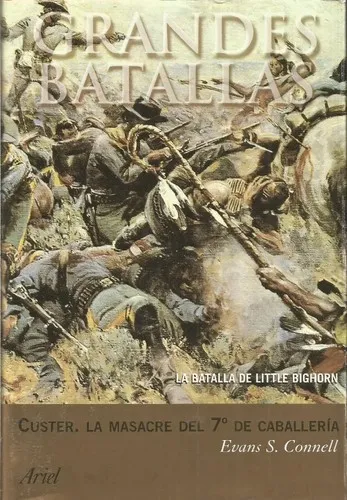
Custer. La masacre del 7º de caballería
Evan S. Connell · 1984
La última batalla de Custer despunta entre los sucesos más imperecederos de la Historia de los Estados Unidos. Más de un siglo después de lo acontecido, siguen escribiéndose libros que suscitan el interés del público, incluso por los detalles más nimios que envuelven al Little Bighorn. Evans s. Connell, a quien Joyce Carol Oates describe como uno de los escritores norteamericanos más interesantes e inteligentes, ha plasmado el que sigue siendo el relato más fidedigno -y también el más absorbente por su amenidad- sobre esta cuestión. Connell aúna el rigor de su investigación con su fina percepción de novelista para dar vida al heroísmo, ineptitud y crueldad de este conmovedor capítulo de la conquista del Oeste.
-
La tierra llora
Peter Cozzens · 2016
Si hay un fenómeno de la historia de los Estados Unidos que se ha explotado hasta la saciedad en la cultura popular occidental, este ha sido la conquista del Oeste y el conflicto con las tribus de nativos que lo habitaban, denominado como las Guerras Indias. De una demonización del indio o nativo norteamericano, el péndulo basculó a partir de la década de 1970 a su santificación, y a menudo se echan en falta visiones más ecuánimes, capaces de superar ese maniqueísmo de buenos y malos. Y eso es algo que Peter Cozzens consigue con La tierra llora. La amarga historia de las Guerras Indias por la conquista del Oeste, una narración apasionante merecedora del prestigioso Gilder Lehrman Prize for Military History y que ha sido elogiado por Booklist como "un maravilloso trabajo de comprensión y compasión". Comprensión, porque Peter Cozzens realiza un enorme esfuerzo en el análisis de las motivaciones que latían detrás del p roceso de expansión hacia el Oeste del que nacerían los modernos Estados Unidos, pero también se pone en la piel de unos indios atrapados entre una mentalidad y modo de vida ancestrales y la modernidad. Pero compasión también, hacia hombres como Caballo Loco, Toro Sentado, Gerónimo y Nube Roja, que las más de las veces pelearon forzados, defendiendo a sus mujeres y niños, en un combate que sabían perdido de antemano. Empero, no hay sensiblería: no se hurtan ni las mezquindades ni el racismo latente en buena parte de la administración estadounidense, ni las continuas querellas intestinas y barbarie de apaches, sioux o comanches. La tierra llora. La amarga historia de las Guerras Indias por la conquista del Oeste se devora página a página, tan rápidamente como veloz avanzó el tendido del ferrocarril por las llanuras del Oeste norteamericano, a lo largo de tres décadas que vieron la extinción de comunidades enteras, en una historia trágica del fin de un mundo pero que hace justicia a vencedores y vencidos.
-
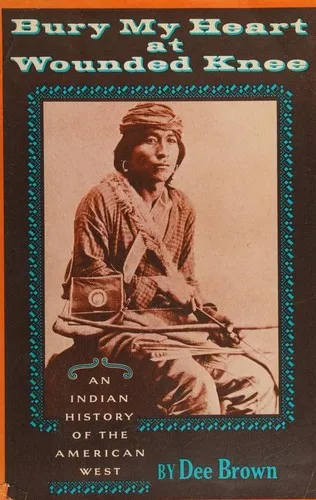
Enterrad mi corazón en Wounded Knee
Dee Alexander Brown · 1971
Publicado por primera vez en 1970 en EE. UU., traducido en todo el mundo y con más de seis millones de ejemplares vendidos, Enterrad mi corazón en Wounded Knee comienza con la Larga Marcha de los navajos en 1860 y se cierra en 1980, con la masacre de los sioux en Wounded Knee. A partir de relatos autobiográficos, testimonios grabados y documentación de la época, Dee Brown ofrece un detallado relato de la destrucción sistemática de los indios americanos por «el hombre blanco», y por primera vez, narra estos acontecimientos desde el punto de vista de los nativos.
-
Undaunted Courage EN
Stephen E. Ambrose · 1996
De momento solo tenemos la sinopsis en inglés.
In this sweeping adventure story, Stephen E. Ambrose, the bestselling author of D-Day, presents the definitive account of one of the most momentous journeys in American history. Ambrose follows the Lewis and Clark Expedition from Thomas Jefferson's hope of finding a waterway to the Pacific, through the heart-stopping moments of the actual trip, to Lewis' lonely demise on the Natchez Trace. Along the way, Ambrose shows us the American West as Lewis saw it -- wild, awsome, and pristinely beautiful. Undaunted Courage is a stunningly told action tale that will delight readers for generations. In 1803 President Thomas Jefferson selected his personal secretary, Captain Meriwether Lewis, to lead a voyage up the Missouri River to the Rockies, over the mountains, down the Columbia River to the Pacific Ocean, and back. Lewis was the perfect choice. He endured incredible hardships and saw incredible sights, including vast herds of buffalo and Indian tribes that had had no previous contact with white men. He and his partner, Captain William Clark, made the first map of the trans-Mississippi West, provided invaluable scientific data on the flora and fauna of the Louisiana Purchase territory, and established the American claim to Oregon, Washington, and Idaho. Ambrose has pieced together previously unknown information about weather, terrain, and medical knowledge at the time to provide a colorful and realistic backdrop for the expedition. Lewis saw the North American continent before any other white man; Ambrose describes in detail native peoples, weather, landscape, science, everything the expedition encountered along the way, through Lewis's eyes. Lewis is supported by a rich variety of colorful characters, first of all Jefferson himself, whose interest in exploring and acquiring the American West went back thirty years. Next comes Clark, a rugged frontiersman whose love for Lewis matched Jefferson's. There are numerous Indian chiefs, and Sacagawea, the Indian girl who accompanied the expedition, along with the French-Indian hunter Drouillard, the great naturalists of Philadelphia, the French and Spanish fur traders of St. Louis, John Quincy Adams, and many more leading political, scientific, and military figures of the turn of the century. This is a book about a hero. This is a book about national unity. But it is also a tragedy. When Lewis returned to Washington in the fall of 1806, he was a national hero. But for Lewis, the expedition was a failure. Jefferson had hoped to find an all-water route to the Pacific with a short hop over the Rockies-Lewis discovered there was no such passage. Jefferson hoped the Louisiana Purchase would provide endless land to support farming-but Lewis discovered that the Great Plains were too dry. Jefferson hoped there was a river flowing from Canada into the Missouri-but Lewis reported there was no such river, and thus no U.S. claim to the Canadian prairie. Lewis discovered the Plains Indians were hostile and would block settlement and trade up the Missouri. Lewis took to drink, engaged in land speculation, piled up debts he could not pay, made jealous political enemies, and suffered severe depression. High adventure, high politics, suspense, drama, and diplomacy combine with high romance and personal tragedy to make this outstanding work of scholarship as readable as a novel.
-
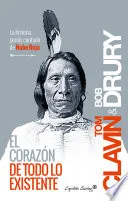
El corazón de todo lo existente
Bob Drury · 2013
Nube Roja fue el único indio americano de la historia en derrotar al Ejército de EE. UU. en una guerra, obligando al Gobierno a procurar la paz bajo los términos impuestos por el jefe indio. En la cima del poder de Nube Roja, los sioux llegaron a reclamar el control sobre una quinta parte de lo que serían los contiguos Estados Unidos y disfrutaron de la lealtad de miles de guerreros feroces. Sin embargo, las neblinas de la historia han ensombrecido extrañamente su figura. Ahora, gracias al redescubrimiento de una autobiografía perdida y a la investigación meticulosa de dos galardonados autores como Bob Drury y Tom Clavin, puede contarse al fin la historia del guerrero indio más poderoso del siglo XIX. En este documento, los autores devuelven a Nube Roja su lugar en la historia. Repasando los acontecimientos que desembocaron en la Guerra de Nube Roja, nos ofrecen retratos íntimos de las muchas vidas con las que se cruzó el jefe indio: hombres de montaña como Jim Bridger, generales estadounidenses como William T. Sherman, exploradores intrépidos como John Bozeman, y memorables guerreros a quienes Nube Roja preparó, como el legendario Caballo Loco. En el centro de la historia se encuentra el gran jefe sioux, luchando por la mera existencia de la forma de vida de los indios.
-
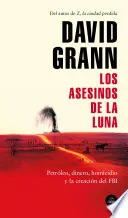
Los Asesinos de la Luna
David Grann · 2017
El libro en que se basa la nueva película de Martin Scorsese, protagonizada por Leonardo DiCaprio y Robert De Niro, entre otros. El autor de Z, la ciudad perdida , David Grann, regresa con un emocionante True Crime que desvela una de las conspiraciones más monstruosas de la historia de Estados Unidos. Best Seller de The New York Times, mejor libro del 2017 según Amazon y Ganador del Edgar Allan Poe Award al Best Fact Crime. En los años veinte, la comunidad india de los Osage en Oklahoma era la población de mayor renta per cápita del mundo. El petróleo que yacía bajo sus propiedades les convirtió en millonarios: construyeron mansiones, tenían chóferes privados y mandaban a sus hijos a estudiar a Europa. Pero un espiral de violencia asoló esta comunidad indígena cuando sus miembros empezaron a morir y a desaparecer en extrañas circunstancias. La familia de una mujer Osage, Mollie Burkhart, se convirtió en un objetivo principal. Sus tres hermanas fueron asesinadas. Una fue envenenada, otra murió a tiros y la tercera falleció en una explosión. Otros miembros de la los Osage morían en circunstancias misteriosas, y muchos de los que se atrevieron a investigar los crímenes fueron también asesinados. Cuando el número de muertos alcanzó los veinticuatro, el recién inaugurado FBI decidió intervenir y fue uno de sus primeros grandes casos de homicidio. Después de que la investigación resultara un desastre, el joven director J. Edgar Hoover acudió al antiguo comandante de Texas, Tom White, para que desvelase el misterio. White estableció un equipo infiltrado, incluyendo a un agente nativo en el grupo. En este apasionante true crime ,que Martin Scorsese y Leonardo DiCaprio llevarán a la gran pantalla, se revelan nuevos secretos de una de las conspiraciones más siniestras contra la comunidad indígena de Estados Unidos. Como ya hizo en Z, la ciudad perdida , Grann se sumerge en una profunda y exhaustiva investigación para desvelar uno de los episodios más oscuros y despiadados de la Historia norteamericana. La crítica ha dicho: « Los asesinos de la luna es un relato perturbador, agonizante y sin parangón, capaz de estrujarte el estómago en un puño y no soltarlo hasta leer la deliberación final, que invito a que conozcas de la mano de Grann» Alba R.Prieto, Negra y mortal «Una historia increíble y monstruosamente disparatada, pero desgraciadamente cierta, estupendamente bien contada en un espléndido ejercicio de nuevo periodismo. Una vez más, la realidad supera a la ficción.» Antonio F. Rodríguez, La Antigua Biblos « Los asesinos de la luna es un libro magnífico, una cautivadora historia real de avaricia, asesinatos en serie e injusticia racial [...]. David Grann es un periodista extraordinario, y esta obra es quizá lo mejor que ha escrito.» Jon Krakauer «Perturbador y fascinante [...] abrasará tu alma.» Dave Eggers, The New York Times Book Review «La historia criminal que cuenta es atroz y repleta de héroes y villanos reales. Hará que te estremezcas ante la inhumanidad del hombre hacia sus congéneres.» Dwight Garner, The New York Times «Como un maestro de la historia detectivesca, Grann sabe guardarse lo mejor para el final. Es ahí donde su investigación meticulosa, paciente ydetallada finalmente penetra la neblina de mentiras y pruebas comprometedoras para llegar al sólido territorio de la verdad.» The Wall Street Journal
-
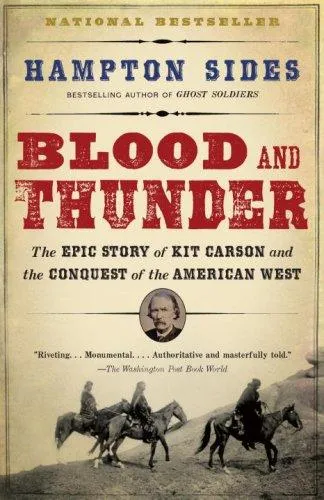
Blood and Thunder EN
Hampton Sides · 2006
De momento solo tenemos la sinopsis en inglés.
Between 1846, when President James K. Polk declared war on Mexico, and 1865, when the South was defeated in the civil war, the United States invaded and conquered the West, creating a mighty nation that stretched from the Atlantic to the Pacific. How this was accomplished is an epic tale of both shame and glory. Before the West could be settled American armies had to not only defeat the Mexican forces that held territory from Texas to California, but also subdue the dozens of Native American tribes that stood in the way. BLOOD AND THUNDER tells the story of how "Manifest Destiny" was forcibly carried out. No tribe resisted more fiercely than the nomadic Navajo who lorded over huge swaths of desert in what is now Arizona and New Mexico. Their great chieftain Narbona saw the ultimate futility of resisting "The New Men," as he called the Americans, but he was stupidly killed by an American trooper in an argument over a stolen horse, and the chance for peace was lost. The Navajo were then led by a ferocious warrior named Manuelito, who had witnessed Narbona's murder and swore vengeance. For twenty years the Americans battled the Navajo, finally defeating them in a brutal siege at Canyon de Chelly and forcing them on a migration known as "The Long Walk." No novelist could have invented the historic figures in these pages. Kit Carson, the legendary trapper, scout and soldier celebrated in early Western dime-novels (called (Blood and Thunders), stands at the center of Sides's tale. Carson had a deep respect and affinity for Native Americans (his first wife was Arapaho), yet he saw himself foremost as a patriot, and he ultimately played a critical role in defeating the Navajo nation.
-
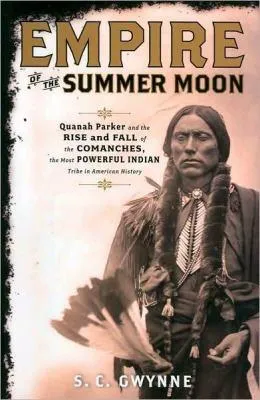
Empire of the Summer Moon EN
S. C. Gwynne · 2010
De momento solo tenemos la sinopsis en inglés.
In the tradition of Bury My Heart at Wounded Knee, a stunningly vivid historical account of the forty-year battle between Comanche Indians and white settlers for control of the American West, centering on Quanah, the greatest Comanche chief of them all. Empire of the Summer Moon spans two astonishing stories. The first traces the rise and fall of the Comanches, the most powerful Indian tribe in American history. The second is the epic saga of the pioneer woman Cynthia Ann Parker and her mixed-blood son Quanah, who became the last and greatest chief of the Comanches. Although readers may be more familiar with the tribal names Apache and Sioux, it was in fact the legendary fighting ability of the Comanches that determined just how and when the American West opened up. Comanche boys became adept bareback riders by age six; full Comanche braves were considered the best horsemen who ever rode. They were so masterful at war and so skillful with their arrows and lances that they stopped the northern drive of colonial Spain from Mexico and halted the French expansion westward from Louisiana. White settlers arriving in Texas from the eastern United States were surprised to find the frontier being rolled backward by Comanches incensed by the invasion of their tribal lands. Against this backdrop Gwynne presents the compelling drama of Cynthia Ann Parker, a nine-year-old girl who was kidnapped by Comanches in 1836. She grew to love her captors and became infamous as the "White Squaw" who refused to return until her tragic capture by Texas Rangers in 1860. More famous still was her son Quanah, a warrior who was never defeated and whose guerrilla wars in the Texas Panhandle made him a legend. S. C. Gwynne's account of these events is meticulously researched, intellectually provocative, and, above all, thrillingly told.