

The 9 books on this stack
-
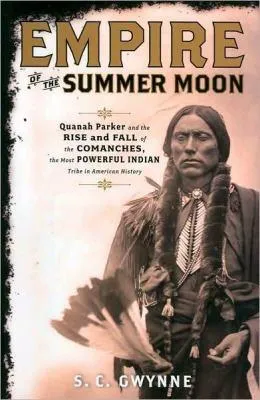
Empire of the Summer Moon
S. C. Gwynne · 2010
In the tradition of Bury My Heart at Wounded Knee, a stunningly vivid historical account of the forty-year battle between Comanche Indians and white settlers for control of the American West, centering on Quanah, the greatest Comanche chief of them all. Empire of the Summer Moon spans two astonishing stories. The first traces the rise and fall of the Comanches, the most powerful Indian tribe in American history. The second is the epic saga of the pioneer woman Cynthia Ann Parker and her mixed-blood son Quanah, who became the last and greatest chief of the Comanches. Although readers may be more familiar with the tribal names Apache and Sioux, it was in fact the legendary fighting ability of the Comanches that determined just how and when the American West opened up. Comanche boys became adept bareback riders by age six; full Comanche braves were considered the best horsemen who ever rode. They were so masterful at war and so skillful with their arrows and lances that they stopped the northern drive of colonial Spain from Mexico and halted the French expansion westward from Louisiana. White settlers arriving in Texas from the eastern United States were surprised to find the frontier being rolled backward by Comanches incensed by the invasion of their tribal lands. Against this backdrop Gwynne presents the compelling drama of Cynthia Ann Parker, a nine-year-old girl who was kidnapped by Comanches in 1836. She grew to love her captors and became infamous as the "White Squaw" who refused to return until her tragic capture by Texas Rangers in 1860. More famous still was her son Quanah, a warrior who was never defeated and whose guerrilla wars in the Texas Panhandle made him a legend. S. C. Gwynne's account of these events is meticulously researched, intellectually provocative, and, above all, thrillingly told.
-
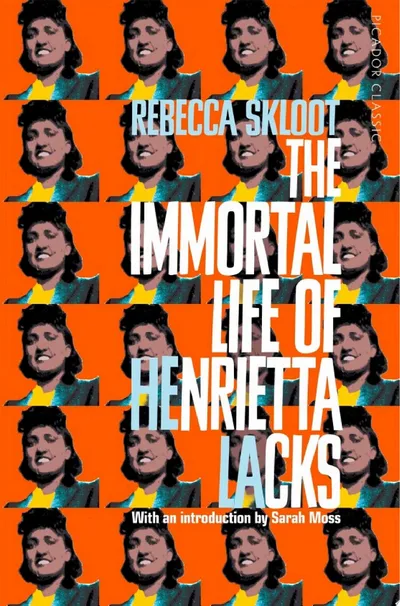
The Immortal Life of Henrietta Lacks
Rebecca Skloot · 2019
A heartbreaking account of a medical miracle: how one woman’s cells – taken without her knowledge – have saved countless lives. The Immortal Life of Henrietta Lacks is a true story of race, class, injustice and exploitation. ‘No dead woman has done more for the living . . . A fascinating, harrowing, necessary book.’ – Hilary Mantel, Guardian With an introduction Sarah Moss, author of by author of Summerwater . Her name was Henrietta Lacks, but scientists know her as HeLa. Born a poor black tobacco farmer, her cancer cells – taken without asking her – became a multimillion-dollar industry and one of the most important tools in medicine. Yet Henrietta’s family did not learn of her ‘immortality’ until more than twenty years after her death, with devastating consequences . . . Rebecca Skloot’s moving account is the story of the life, and afterlife, of one woman who changed the medical world forever. Balancing the beauty and drama of scientific discovery with dark questions about who owns the stuff our bodies are made of, The Immortal Life of Henrietta Lacks is an extraordinary journey in search of the soul and story of a real woman, whose cells live on today in all four corners of the world. Now an HBO film starring Oprah Winfrey and Rose Byrne.
-
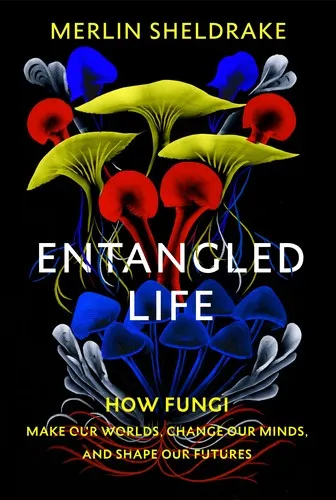
Entangled Life
Merlin Sheldrake · 2020
The smash-hit Sunday Times bestseller now illustrated with over 100 spectacular full-colour images, showcasing this wondrous and wildly various lifeform as never before 'Astonishing ... it seems somehow to tip the natural world upside down' Observer 'Completely mind-blowing ... reads like an adventure story' Sunday Times *WINNER OF THE ROYAL SOCIETY BOOK PRIZE 2021* *WINNER OF THE WAINWRIGHT PRIZE FOR CONSERVATION WRTITING 2021* *SHORTLISTED FOR THE RATHBONES FOLIO PRIZE 2021* *SHORTLISTED FOR THE BRITISH BOOK AWARDS BOOK OF THE YEAR 2021* The more we learn about fungi, the less makes sense without them. They can change our minds, heal our bodies and even help us avoid environmental disaster; they are metabolic masters, earth-makers and key players in most of nature's processes. In Entangled Life, Merlin Sheldrake takes us on a mind-altering journey into their spectacular world, and reveals how these extraordinary organisms transform our understanding of our planet and life itself. 'Dazzling, vibrant, vision-changing' Robert Macfarlane 'Urgent, astounding and necessary' Helen Macdonald 'Gorgeous!' Margaret Atwood (on Twitter) 'Wonderful' Nigella Lawson 'A magical writer' Russell Brand 'This book is like one surprise after another' David Byrne 'Uplifting' Jeanette Winterson * A Sunday Times, Daily Telegraph, New Statesman, The Times, Evening Standard, Mail on Sunday, BBC Science Focus and Time Book of the Year *
-
Salt
Mark Kurlansky · 2002
Homer called salt a divine substance, while Plato described it as especially dear to the gods. Kurlansky blends political, commercial, scientific, religious and culinary records into this history of the substance.
-
Stiff
Mary Roach · 2003
A New York Times forensic science bestseller, "this quirky, funny read offers perspective and insight about life, death and the medical profession."* For two thousand years, cadavers—some willingly, some unwittingly—have been involved in science's boldest strides and weirdest undertakings. They've tested France's first guillotines, ridden the NASA Space Shuttle, been crucified in a Parisian laboratory to test the authenticity of the Shroud of Turin, and helped solve the mystery of TWA Flight 800. For every new surgical procedure, from heart transplants to gender confirmation surgery, cadavers have helped make history in their quiet way. "Delightful—though never disrespectful" ( Time Out New York), science writer Mary Roach's Stiff investigates the strange lives of our bodies postmortem and answers the question: What should we do after we die? "You can close this book with an appreciation of the miracle that the human body really is." —* Wall Street Journal "Acutely entertaining, morbidly fascinating." — Forbes "One of the funniest and most unusual books of the year. . . . Gross, educational, and unexpectedly sidesplitting." — Entertainment Weekly With an Epilogue by the Author
-
A short history of nearly everything
Bill Bryson · 2003
Bill Bryson describes himself as a reluctant traveller: but even when he stays safely in his own study at home, he can't contain his curiosity about the world around him. A Short History of Nearly Everything is his quest to find out everything that has happened from the Big Bang to the rise of civilization - how we got from there, being nothing at all, to here, being us. Bill Bryson's challenge is to take subjects that normally bore the pants off most of us, like geology, chemistry and particle physics, and see if there isn't some way to render them comprehensible to people who have never thought they could be interested in science. It's not so much about what we know, as about how we know what we know. How do we know what is in the centre of the Earth, or what a black hole is, or where the continents were 600 million years ago? How did anyone ever figure these things out? On his travels through time and space, he encounters a splendid collection of astonishingly eccentric, competitive, obsessive and foolish scientists, like the painfully shy Henry Cavendish who worked out many conundrums like how much the Earth weighed, but never bothered to tell anybody about many of his findings. In the company of such extraordinary people, Bill Bryson takes us with him on the ultimate eye-opening journey, and reveals the world in a way most of us have never seen it before.
-
The Dawn of Everything
David Graeber · 2021
THE NEW YORK TIMES BESTSELLER AND SUNDAY TIMES, OBSERVER AND BBC HISTORY BOOK OF THE YEAR FINALIST FOR THE ORWELL PRIZE FOR POLITICAL WRITING 2022 'Pacey and potentially revolutionary' Sunday Times 'Iconoclastic and irreverent ... an exhilarating read' The Guardian For generations, our remote ancestors have been cast as primitive and childlike - either free and equal, or thuggish and warlike. Civilization, we are told, could be achieved only by sacrificing those original freedoms or, alternatively, by taming our baser instincts. David Graeber and David Wengrow show how such theories first emerged in the eighteenth century as a reaction to indigenous critiques of European society, and why they are wrong. In doing so, they overturn our view of human history, including the origins of farming, property, cities, democracy, slavery and civilization itself. Drawing on path-breaking research in archaeology and anthropology, the authors show how history becomes a far more interesting place once we begin to see what's really there. If humans did not spend 95 per cent of their evolutionary past in tiny bands of hunter-gatherers, what were they doing all that time? If agriculture, and cities, did not mean a plunge into hierarchy and domination, then what kinds of social and economic organization did they lead to? The answers are often unexpected, and suggest that the course of history may be less set in stone, and more full of playful possibilities than we tend to assume. The Dawn of Everything fundamentally transforms our understanding of the human past and offers a path toward imagining new forms of freedom, new ways of organizing society. This is a monumental book of formidable intellectual range, animated by curiosity, moral vision and faith in the power of direct action. 'This is not a book. This is an intellectual feast' Nassim Nicholas Taleb 'The most profound and exciting book I've read in thirty years' Robin D. G. Kelley
-
Women's Work
Elizabeth Wayland Barber · 1994
"A fascinating history of…[a craft] that preceded and made possible civilization itself." —New York Times Book Review New discoveries about the textile arts reveal women's unexpectedly influential role in ancient societies. Twenty thousand years ago, women were making and wearing the first clothing created from spun fibers. In fact, right up to the Industrial Revolution the fiber arts were an enormous economic force, belonging primarily to women. Despite the great toil required in making cloth and clothing, most books on ancient history and economics have no information on them. Much of this gap results from the extreme perishability of what women produced, but it seems clear that until now descriptions of prehistoric and early historic cultures have omitted virtually half the picture. Elizabeth Wayland Barber has drawn from data gathered by the most sophisticated new archaeological methods—methods she herself helped to fashion. In a "brilliantly original book" (Katha Pollitt, Washington Post Book World), she argues that women were a powerful economic force in the ancient world, with their own industry: fabric.
-
Don't sleep, there are snakes
Daniel Leonard Everett · 2008
This work offers a riveting account of the astonishing experiences and discoveries made by linguist Everett while he lived with the Piraha, a small tribe of Amazonian Indians of central Brazil. B&w illustrations throughout.