

The 8 books on this stack
-
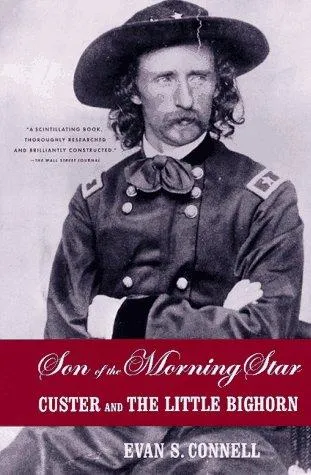
Son of the Morning Star
Evan S. Connell · 1984
Discusses the Battle of the Little Big Horn, the federal and Indian antagonists, and of the battle's place in the context of the Plains Indian Wars.
-
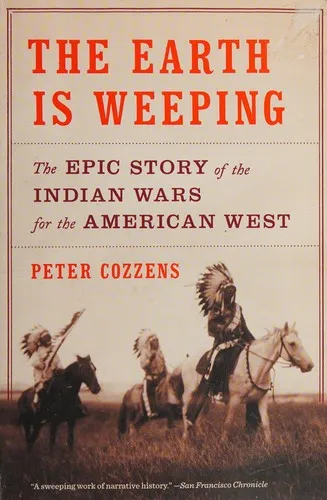
Earth Is Weeping
Peter Cozzens · 2016
Sunday Times' Best History Books of 2017 Winner of the Gilder Lehrman Prize for Military History Winner of the 2017 Caroline Bancroft History Prize Shortlisted for the Military History Magazine Book of the Year Award NOMINATED FOR THE 2017 PEN HESSELL-TILTMAN 'Extraordinary... Cozzens has stripped the myth from these stories, but he is such a superb writer that what remains is exquisite' The Times In a sweeping narrative, Peter Cozzens tells the gripping story of the wars that destroyed native ways of life as the American nation continued its expansion onto tribal lands after the Civil War, setting off a conflict that would last nearly three decades. By using original research and first-hand sources from both sides, Cozzens illuminates the encroachment experienced by the tribes and the tribal conflicts over whether to fight or make peace, and explores the squalid lives of soldiers posted to the frontier and the ethical quandaries faced by generals who often sympathized with their native enemies. Bringing together a cast of fascinating characters, including Custer, Sherman, Grant and a host of other military and political figures, as well as great native leaders such as Crazy Horse, Sitting Bull, Geronimo and Red Cloud, The Earth is Weeping is the fullest account to date of how the West was won... and lost.
-
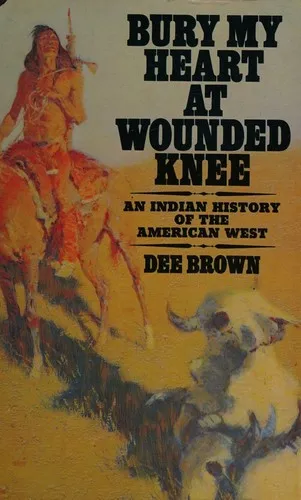
Bury My Heart at Wounded Knee
Dee Alexander Brown · 1971
Bury My Heart at Wounded Knee is Dee Brown's eloquent, fully documented account of the systematic destruction of the American Indian during the second half of the nineteenth century. A national bestseller in hardcover for more than a year after its initial publication, it has sold almost four million copies and has been translated into seventeen languages. For this elegant thirtieth anniversary hardcover edition, Brown has contributed an incisive new preface. Using council records, autobiographies, and firsthand descriptions, Brown allows the great chiefs and warriors of the Dakota, Ute, Sioux, Cheyenne, and other tribes to tell us in their own words of the battles, massacres, and broken treaties that finally left them demoralized and defeated. A unique and disturbing narrative told with force and clarity, Bury My Heart at Wounded Knee changed forever our vision of how the West was really won.
-
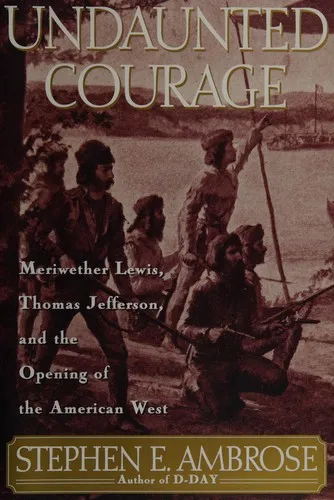
Undaunted Courage
Stephen E. Ambrose · 1996
In this sweeping adventure story, Stephen E. Ambrose, the bestselling author of D-Day, presents the definitive account of one of the most momentous journeys in American history. Ambrose follows the Lewis and Clark Expedition from Thomas Jefferson's hope of finding a waterway to the Pacific, through the heart-stopping moments of the actual trip, to Lewis' lonely demise on the Natchez Trace. Along the way, Ambrose shows us the American West as Lewis saw it -- wild, awsome, and pristinely beautiful. Undaunted Courage is a stunningly told action tale that will delight readers for generations. In 1803 President Thomas Jefferson selected his personal secretary, Captain Meriwether Lewis, to lead a voyage up the Missouri River to the Rockies, over the mountains, down the Columbia River to the Pacific Ocean, and back. Lewis was the perfect choice. He endured incredible hardships and saw incredible sights, including vast herds of buffalo and Indian tribes that had had no previous contact with white men. He and his partner, Captain William Clark, made the first map of the trans-Mississippi West, provided invaluable scientific data on the flora and fauna of the Louisiana Purchase territory, and established the American claim to Oregon, Washington, and Idaho. Ambrose has pieced together previously unknown information about weather, terrain, and medical knowledge at the time to provide a colorful and realistic backdrop for the expedition. Lewis saw the North American continent before any other white man; Ambrose describes in detail native peoples, weather, landscape, science, everything the expedition encountered along the way, through Lewis's eyes. Lewis is supported by a rich variety of colorful characters, first of all Jefferson himself, whose interest in exploring and acquiring the American West went back thirty years. Next comes Clark, a rugged frontiersman whose love for Lewis matched Jefferson's. There are numerous Indian chiefs, and Sacagawea, the Indian girl who accompanied the expedition, along with the French-Indian hunter Drouillard, the great naturalists of Philadelphia, the French and Spanish fur traders of St. Louis, John Quincy Adams, and many more leading political, scientific, and military figures of the turn of the century. This is a book about a hero. This is a book about national unity. But it is also a tragedy. When Lewis returned to Washington in the fall of 1806, he was a national hero. But for Lewis, the expedition was a failure. Jefferson had hoped to find an all-water route to the Pacific with a short hop over the Rockies-Lewis discovered there was no such passage. Jefferson hoped the Louisiana Purchase would provide endless land to support farming-but Lewis discovered that the Great Plains were too dry. Jefferson hoped there was a river flowing from Canada into the Missouri-but Lewis reported there was no such river, and thus no U.S. claim to the Canadian prairie. Lewis discovered the Plains Indians were hostile and would block settlement and trade up the Missouri. Lewis took to drink, engaged in land speculation, piled up debts he could not pay, made jealous political enemies, and suffered severe depression. High adventure, high politics, suspense, drama, and diplomacy combine with high romance and personal tragedy to make this outstanding work of scholarship as readable as a novel.
-
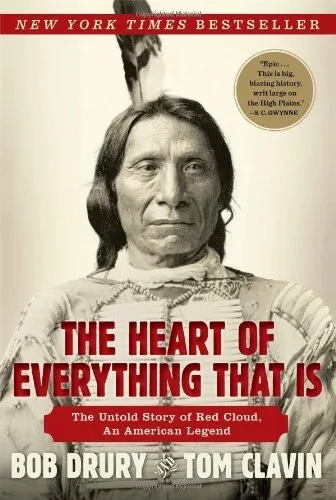
Heart of Everything That Is
Bob Drury · 2013
Drawing on a wealth of evidence, including Red Cloud's biography, which was lost for nearly a hundred years, this never-before-told story of the great Oglala Sioux chief - the only Plains Indian to defeat the United States Army in a war - places read
-
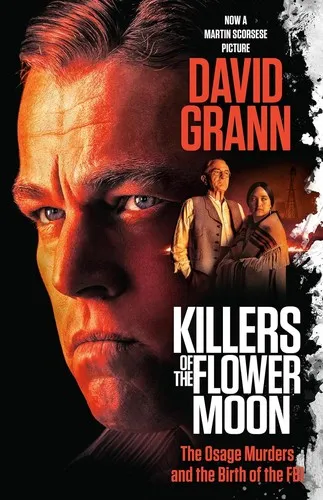
Killers of the Flower Moon
David Grann · 2017
#1 NEW YORK TIMES BESTSELLER • NOW A MARTIN SCORSESE PICTURE • A twisting, haunting true-life murder mystery about one of the most monstrous crimes in American history from the author of The Wager and The Lost City of Z “A shocking whodunit…What more could fans of true-crime thrillers ask?”— USA Today “A masterful work of literary journalism crafted with the urgency of a mystery.” — The Boston Globe In the 1920s, the richest people per capita in the world were members of the Osage Nation in Oklahoma. After oil was discovered beneath their land, the Osage rode in chauffeured automobiles, built mansions, and sent their children to study in Europe. Then, one by one, the Osage began to be killed off. The family of an Osage woman, Mollie Burkhart, became a prime target. One of her relatives was shot. Another was poisoned. And it was just the beginning, as more and more Osage were dying under mysterious circumstances, and many of those who dared to investigate the killings were themselves murdered. As the death toll rose, the newly created FBI took up the case, and the young director, J. Edgar Hoover, turned to a former Texas Ranger named Tom White to try to unravel the mystery. White put together an undercover team, including a Native American agent who infiltrated the region, and together with the Osage began to expose one of the most chilling conspiracies in American history. Look for David Grann’s latest bestselling book, The Wager !
-
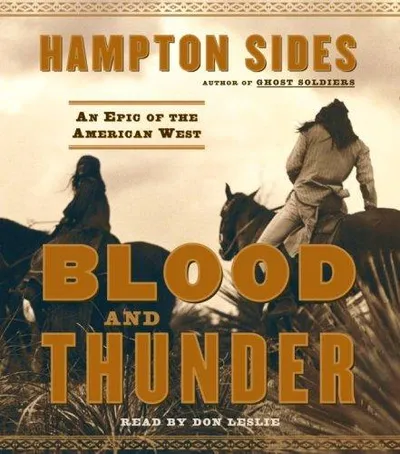
Blood and Thunder
Hampton Sides · 2006
Between 1846, when President James K. Polk declared war on Mexico, and 1865, when the South was defeated in the civil war, the United States invaded and conquered the West, creating a mighty nation that stretched from the Atlantic to the Pacific. How this was accomplished is an epic tale of both shame and glory. Before the West could be settled American armies had to not only defeat the Mexican forces that held territory from Texas to California, but also subdue the dozens of Native American tribes that stood in the way. BLOOD AND THUNDER tells the story of how "Manifest Destiny" was forcibly carried out. No tribe resisted more fiercely than the nomadic Navajo who lorded over huge swaths of desert in what is now Arizona and New Mexico. Their great chieftain Narbona saw the ultimate futility of resisting "The New Men," as he called the Americans, but he was stupidly killed by an American trooper in an argument over a stolen horse, and the chance for peace was lost. The Navajo were then led by a ferocious warrior named Manuelito, who had witnessed Narbona's murder and swore vengeance. For twenty years the Americans battled the Navajo, finally defeating them in a brutal siege at Canyon de Chelly and forcing them on a migration known as "The Long Walk." No novelist could have invented the historic figures in these pages. Kit Carson, the legendary trapper, scout and soldier celebrated in early Western dime-novels (called (Blood and Thunders), stands at the center of Sides's tale. Carson had a deep respect and affinity for Native Americans (his first wife was Arapaho), yet he saw himself foremost as a patriot, and he ultimately played a critical role in defeating the Navajo nation.
-
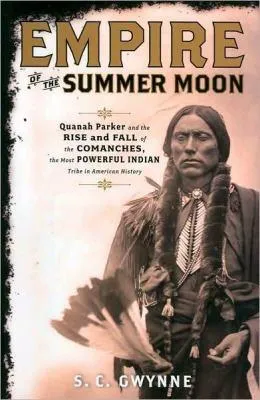
Empire of the Summer Moon
S. C. Gwynne · 2010
In the tradition of Bury My Heart at Wounded Knee, a stunningly vivid historical account of the forty-year battle between Comanche Indians and white settlers for control of the American West, centering on Quanah, the greatest Comanche chief of them all. Empire of the Summer Moon spans two astonishing stories. The first traces the rise and fall of the Comanches, the most powerful Indian tribe in American history. The second is the epic saga of the pioneer woman Cynthia Ann Parker and her mixed-blood son Quanah, who became the last and greatest chief of the Comanches. Although readers may be more familiar with the tribal names Apache and Sioux, it was in fact the legendary fighting ability of the Comanches that determined just how and when the American West opened up. Comanche boys became adept bareback riders by age six; full Comanche braves were considered the best horsemen who ever rode. They were so masterful at war and so skillful with their arrows and lances that they stopped the northern drive of colonial Spain from Mexico and halted the French expansion westward from Louisiana. White settlers arriving in Texas from the eastern United States were surprised to find the frontier being rolled backward by Comanches incensed by the invasion of their tribal lands. Against this backdrop Gwynne presents the compelling drama of Cynthia Ann Parker, a nine-year-old girl who was kidnapped by Comanches in 1836. She grew to love her captors and became infamous as the "White Squaw" who refused to return until her tragic capture by Texas Rangers in 1860. More famous still was her son Quanah, a warrior who was never defeated and whose guerrilla wars in the Texas Panhandle made him a legend. S. C. Gwynne's account of these events is meticulously researched, intellectually provocative, and, above all, thrillingly told.