

The 10 books on this stack
-
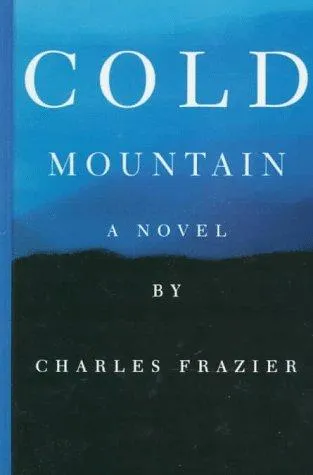
Cold Mountain
Charles Frazier · 1997
The impact of the Civil War on lovers. Inman is not the man he used to be, as wounded in battle he slowly makes his way home to North Carolina. His sweetheart, Ada, too has changed, no longer a flighty belle but a hard-working farm woman. Will love be the same?
-
News of the World ARE
Paulette Jiles · 2016
In the wake of the Civil War, Captain Jefferson Kyle Kidd travels through northern Texas, giving live readings from newspapers to paying audiences hungry for news of the world. An elderly widower who has lived through three wars and fought in two of them, the captain enjoys his rootless, solitary existence. In Wichita Falls, he is offered a $50 gold piece to deliver a young orphan to her relatives in San Antonio. Four years earlier, a band of Kiowa raiders killed Johanna's parents and sister; sparing the little girl, they raised her as one of their own. Recently rescued by the U.S. army, the ten-year-old has once again been torn away from the only home she knows. Their 400-mile journey south through unsettled territory and unforgiving terrain proves difficult and at times dangerous. Johanna has forgotten the English language, tries to escape at every opportunity, throws away her shoes, and refuses to act "civilized." Yet as the miles pass, the two lonely survivors tentatively begin to trust each other, forming a bond that marks the difference between life and death in this treacherous land. Arriving in San Antonio, the reunion is neither happy nor welcome. The captain must hand Johanna over to an aunt and uncle she does not remember -- strangers who regard her as an unwanted burden. A respectable man, Captain Kidd is faced with a terrible choice: abandon the girl to her fate or become -- in the eyes of the law -- a kidnapper himself.
-
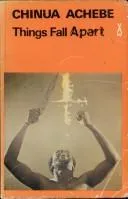
Things Fall Apart
Chinua Achebe · 1958
- Presents the most important 20th-century criticism on major works from "The Odyssey through modern literature- The critical essays reflect a variety of schools of criticism- Contains critical biographies, notes on the contributing critics, a chronology of the author's life, and an index- Introductory essay by Harold Bloom
-
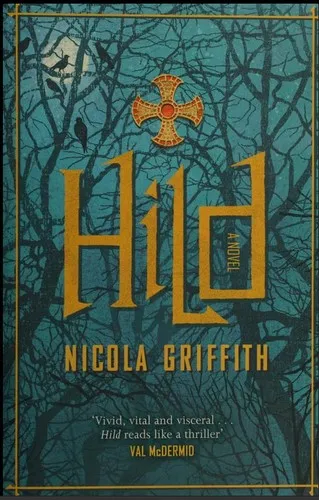
Hild
Nicola Griffith · 2013
'You are a prophet and seer with the brightest mind in an age. Your blood is that of the man who should have been king ...That's what the king and his lords see. And they will kill you, one day' Britain in the seventh century - and the world is changing. Small kingdoms are merging, frequently and violently. Edwin, King of Northumbria, plots his rise to overking of all the Angles. Ruthless and unforgiving, he is prepared to use every tool at his disposal: blood, bribery, belief. Into this brutal, vibrant court steps Hild - Edwin's youngest niece. With her glittering mind and powerful curiosity, Hild has a unique way of reading the world. By studying nature, observing human behavior and matching cause with effect, she has developed the ability to make startlingly accurate predictions. It is a gift that can seem uncanny, even supernatural, to those around her. It is also a valuable weapon. Hild is indispensable to Edwin - unless she should ever lead him astray. The stakes are life and death: for Hild, for her family, for her loved ones, and for the increasing numbers who seek the protection of the strange girl who can see the future and lead men like a warrior. In this vivid, utterly compelling novel, Nicola Griffith has brought the Early Middle Ages to life in an extraordinary act of alchemy. Drawn from the story of St Hilda of Whitby - one of the most fascinating and pivotal figures of the age - Hild transports the reader into a mesmerising, unforgettable world.
-
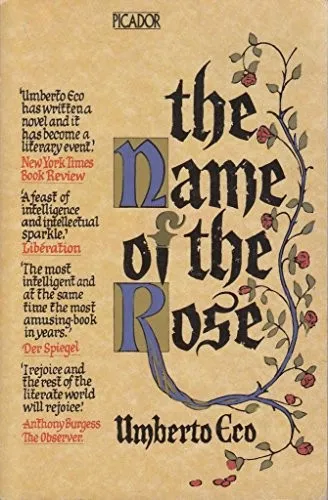
The Name of the Rose
Umberto Eco · 2003
The year is 1327. Franciscans in a wealthy Italian abbey are suspected of heresy, and Brother William of Baskerville arrives to investigate. His delicate mission is suddenly overshadowed by seven bizarre deaths that take place in seven days and nights of apocalyptic terror. The body of one monk is found in a cask of pigs' blood, another is floating in a bathhouse, still another is crushed at the foot of a cliff.
-

Wolf Hall
Hilary Mantel · 2009
Now a major TV series Winner of the Man Booker Prize Shortlisted for the Women's Prize for Fiction Shortlisted for the Costa Novel Award 'Dizzyingly, dazzlingly good' Daily Mail 'Our most brilliant English writer' Guardian In this brilliant novel, Hilary Mantel brings the opulent, brutal world of the Tudors to bloody, glittering life. It is the backdrop to the rise and rise of Thomas Cromwell: lowborn boy, charmer, bully, master of deadly intrigue and, finally, most powerful of Henry VIII's courtiers, determined to bring England into a modern age. Heralded as the greatest English novels of this century, the Wolf Hall trilogy has won two Booker Prizes and been adapted into hugely successful stage plays. The first two books, Wolf Hall and Bring Up the Bodies, were transformed into a BAFTA- and Golden Globe-winning BBC television series, starring Mark Rylance and Damian Lewis. The cast will return in the long-awaited concluding series, Wolf Hall: The Mirror & the Light.
-
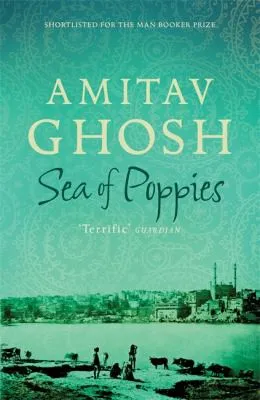
Sea of Poppies
Amitav Ghosh · 2005
Shortlisted for the Man Booker Prize 2008 'Sea of Poppies boasts a varied collection of characters to love and hate, and provides wonderfully detailed descriptions . . . utterly involving and piles on tension until the very last page' Sunday Times At the heart of this epic saga, set just before the Opium Wars, is an old slaving-ship, the Ibis. Its destiny is a tumultuous voyage across the Indian Ocean, its crew a motley array of sailors and stowaways, coolies and convicts. In a time of colonial upheaval, fate has thrown together a truly diverse cast of Indians and Westerners, from a bankrupt Raja to a widowed villager, from an evangelical English opium trader to a mulatto American freedman. As their old family ties are washed away they, like their historical counterparts, come to view themselves as jahaj-bhais or ship-brothers. An unlikely dynasty is born, which will span continents, races and generations. The vast sweep of this historical adventure spans the lush poppy fields of the Ganges, the rolling high seas, and the exotic backstreets of China. But it is the panorama of characters, whose diaspora encapsulates the vexed colonial history of the East itself, which makes Sea of Poppies so breathtakingly alive - a masterpiece from one of the world's finest novelists.
-
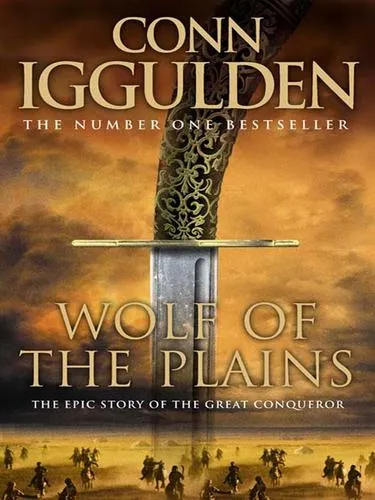
Wolf of the Plains
Conn Iggulden · 2007
The brand new novel from the No. 1 bestselling author of Emperor, his series on Julius Caesar. His new novel, 'Wolf of the Plains', is the much anticipated beginning of the Conqueror series on Genghis Khan and his descendants. It is a wonderful, epic story which Conn Iggulden brings brilliantly to life.'I am the land and the bones of the hills. I am the winter. 'Temujin, the second son of the khan of the Wolves tribe, was only eleven when his father died in an ambush. His family were thrown out of the tribe and left alone, without food or shelter, to starve to death on the harsh Mongolian plains. It was a rough introduction to his life, to a sudden adult world, but Temujin survived, learning to combat natural and human threats. A man, a small family, without a tribe was always at risk but he gathered other outsiders to him, creating a new tribal identity. It was during some of his worst times that the image of uniting the warring tribes and bringing the silver people together came to him. He will become the khan of the sea of grass, Genghis.
-
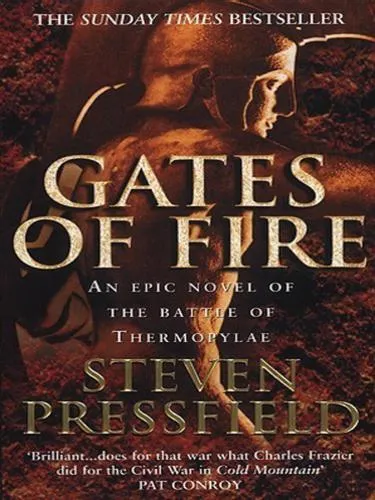
Gates of Fire
Steven Pressfield · 1998
In the Sunday Times bestseller Gates of Fire, Steven Pressfield tells the breathtaking story of the legendary Spartans: the men and women who helped shaped our history and have themselves become as immortal as their gods. 'Breathtakingly brilliant . . . this is a work of rare genius. Savour it!' DAVID GEMMELL 'A tale worthy of Homer, a timeless epic of man and war, exquisitely researched and boldy written. Pressfield has created a new classic' STEPHEN COONTS 'A really impressive book - imaginatively framed, historically detailed and a really gripping narrative' ***** Reader review 'Beautifully written and a great joy to read' ***** Reader review ************************** Go tell the Spartans, stranger passing by, That here, obedient to their laws, we lie. 480 BC: At a bleak pass in a far-flung corner of eastern Greece, three hundred Spartan warriors faced the army of King Xerxes of Persia, a massive force rumoured to be over a million strong. Their orders were simple: to delay the enemy for as long as possible in order to buy time for the main Greek armies to mobilize. For six days the Spartans held the invaders at bay. In the final hours - their shields broken, swords and spears shattered - they fought with their bare hands before being overwhelmed . . . It was battle that would become synonymous with extraordinary courage, heroism and self-sacrifice. It was a battle called Thermopylae.
-

The Persian Boy
Mary Renault · 1972
"It takes skill to depict, as Miss Renault has done, this half-man, half Courtesan who is so deeply in love with the warrior."-"The Atlantic Monthly"The Persian Boy traces the last years of Alexander's life through the eyes of his lover, Bagoas. Abducted and gelded as a boy, Bagoas was sold as a courtesan to King Darius of Persia, but found freedom with Alexander after the Macedon army conquered his homeland. Their relationship sustains Alexander as he weathers assassination plots, the demands of two foreign wives, a sometimes-mutinous army, and his own ferocious temper. After Alexander's mysterious death, we are left wondering if this Persian boy understood the great warrior and his ambitions better than anyone.