

The 7 books on this stack
-
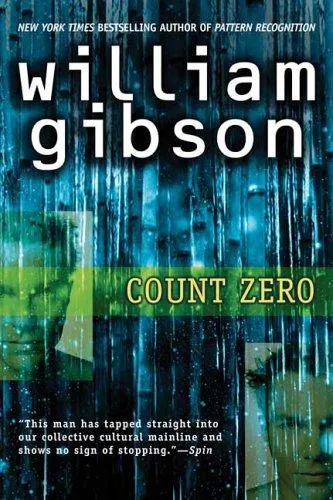
Count Zero
William Gibson · 1986
William Gibson continues the visionary Sprawl Trilogy that began with Neuromancer in this frighteningly probable parable of the future. A corporate mercenary wakes in a reconstructed body, a beautiful woman by his side. Then Hosaka Corporation reactivates him, for a mission more dangerous than the one he’s recovering from: to get a defecting chief of R&D—and the biochip he’s perfected—out intact. But this proves to be of supreme interest to certain other parties—some of whom aren’t remotely human....
-
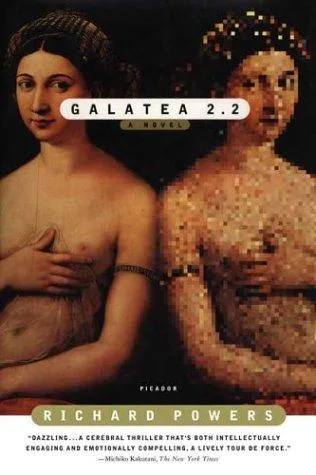
Galatea 2. 2
Richard Powers · 1995
Read this thrilling and timely novel of the human soul from the Pulitzer Prize-winning author of The Overstory. After many years of living abroad, a young writer returns to the United States to take up a position at his former college. There he encounters Philip Lentz, an outspoken neurologist intent on using computers to model the human brain. Lentz involves the writer in an outlandish and irresistible project - to train a computing system by reading a canonical list of Great Books. Through repeated tutorials, the machine grows gradually more worldly, until it demands to know its own age, sex, race and reason for existing. 'An ingenious, ambitious, at times dizzily cerebral work... It soars and spins... The novel attains an aching, melancholy beauty' New York Times
-
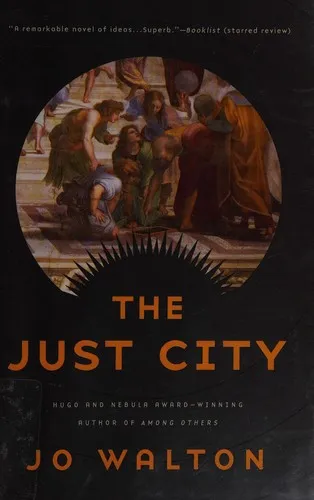
Just City
Jo Walton · 2001
The goddess Athene attempts to create a utopia with robots and time travelers in this science fiction fantasy by a Hugo and Nebula Award–winning author. "Walton's no-nonsense prose and dialogue are the kind of thing I can read anywhere, in any situation, and fall into a world of intelligent people speaking to each other intelligently in interesting ways. . . . Brilliant, compelling, and frankly unputdownable." —NPR Created as an experiment by the time-traveling goddess Pallas Athene, the Just City is a planned community, populated by over ten thousand children and a few hundred adult teachers from all eras of history, along with some handy robots from the far human future—all set down together on a Mediterranean island in the distant past. The student Simmea, born an Egyptian farmer's daughter sometime between 500 and 1000 A.D., is a brilliant child, eager for knowledge, ready to strive to be her best self. The teacher Maia was once Ethel, a young Victorian lady of much learning and few prospects, who prayed to Pallas Athene in an unguarded moment during a trip to Rome—and, in an instant, found herself in the Just City with grey-eyed Athene standing unmistakably before her. Meanwhile, Apollo—stunned by the realization that there are things mortals understand better than he does—has arranged to live a human life, and has come to the City as one of the children. He knows his true identity, and conceals it from his peers. For this lifetime, he is prone to all the troubles of being human. Then, a few years in, Sokrates arrives—the same Sokrates recorded by Plato himself—to ask all the troublesome questions you would expect. What happens next is a tale only the brilliant Jo Walton could tell . . . "A remarkable novel of ideas. . . . Superb." — Booklist (Starred Review) "A brilliant and haunting meditation on utopia, power, and consent—with deeply engaging characters and consummately clever world-building. Jo Walton has given us another winner." —Susan Palwick
-
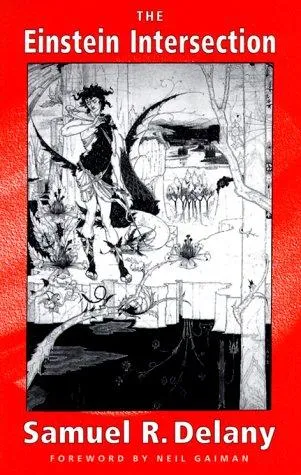
-
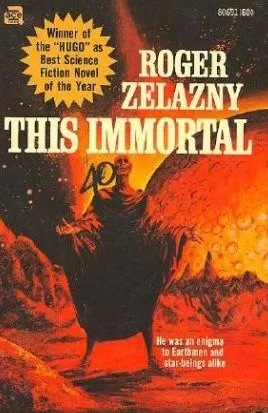
This Immortal
Roger Zelazny · 1967
Conrad Nomikos has a long, rich personal history that he¿d rather not talk about. He has also been given a job that he¿d rather not do. Escorting an alien grandee on a guided tour around the shattered remains of Earth after a catastrophic nuclear war is not something he relishes. Especially when it it rapidly becomes clear that he is at the centre of high-level intrigue that could determine the future of Earth itself. But Conrad Nomikos is a very special guy and he¿s been around - for a very long time.
-
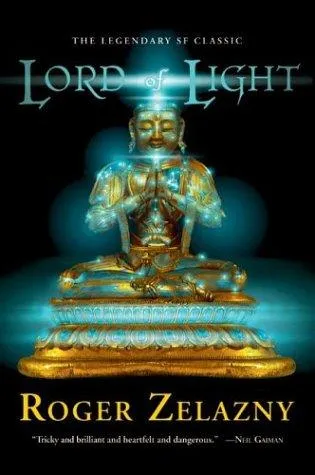
Lord of Light
Roger Zelazny · 1967
Imagine a distant world where gods walk as men, but wield vast and hidden powers. Here they have made the stage on which they build a subtle pattern of alliance, love, and deadly enmity. Are they truly immortal? Who are these gods who rule the destiny of a teeming world? Their names include Brahma, Kali, Krishna and also he who was called Buddha, the Lord of Light, but who now prefers to be known simply as Sam. The gradual unfolding of the story -- how the colonization of another planet became a re-enactment of Eastern mythology -- is one of the great imaginative feats of modern science fiction.
-
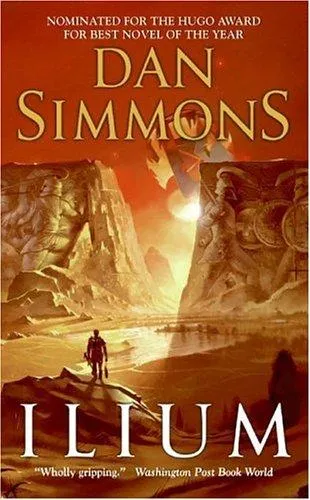
Ilium
Dan Simmons · 2006
Taking the events and characters of the Iliad as his jumping- off point, Dan Simmons has created an epic of time travel and savage warfare. Travellers from 40,000 years in the future return to Homer's Greece and rewrite history forever, their technology impacting on the population in a godlike fashion. This is broad scope space opera rich in classical and literary allusion, from one of the key figures in 1990s world SF. Ilium marks a return to the genre for one of its greats.