Dystopias that hit harder now
 +4 more
Dystopian novels that land differently now. Each takes one true thing and turns the dial until it screams. Decades old, somehow this morning's news.
Hand-picked and sealed. Every book here was chosen on purpose — no votes, no algorithm.

Stacked by Drayfus · 24 views · Updated 3 months ago
The 8 books on this stack
-
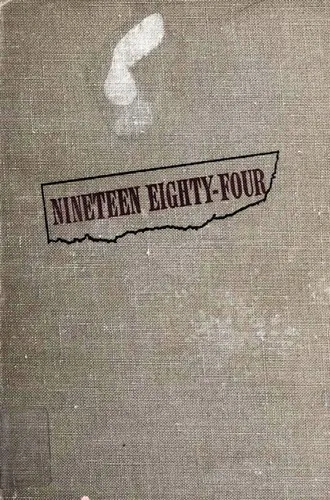
George Orwell 1956
Winston Smith is a member of the Outer Party. He works in the Records Department in the Ministry of Truth, rewriting and distorting history. To escape Big Brother's tyranny, at least inside his own mind.
View book1 want to read
-
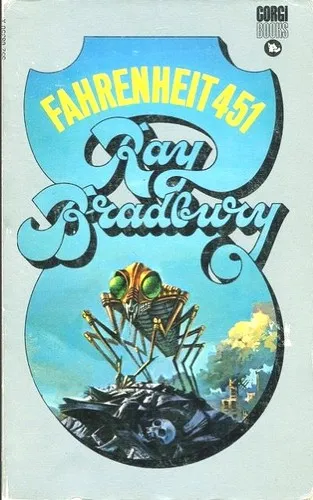
Ray Bradbury 1953
Fahrenheit 451 is a dystopian novel by American writer Ray Bradbury. Fahrenheit 451 is the temperature at which book paper spontaneously catches fire and burns. It is a futuristic novel describing a time when the government has ordered that all books be burned. This may seem to be ridiculous and could never be happening, but it is starting to happen in real life now, today. Now we have a president who accuses everything in the press of being "fake news". He tells his followers who constitute a near majority never to believe the news media. He has ordered the arrest and criminal prosecution of the leading law enforcement officers including the Director of the FBI and the Director of the Central Intelligence Agency. He has accused most of his political opponents of corruption and crime. Nobody knows what is the truth and what is false any more. He says that decisions of the highest courts of the United States are almost all fake. He openly attacks and criticizes the highest judges of the Supreme Court. He says the truth is false and the false is true. The result is we the people do not know who or what to believe. All the great scientists have found that climate change is real and our time on this earth may be limited, but he says climate change is a hoax and we should ignore the works of the scientists. This is not the first time this has happened. In China, Chairman Mao declared his Cultural Revolution and the Great Leap Forwards. China has the oldest civilization in the world, going back to before Confucius in 551-479 BC. Yet, during the Cultural Revolution, Chairman Mao ordered all the old books burned and destroyed and even ordered the people to destroy their old household furniture. I found this out myself in 2011 when I toured China after the World Memory Championships in Guangzhou China. As a book publisher, I wanted to reprint some old classical works. I was shocked to discover that no books were available dated before 1949 and few after that. Everything earlier than that had been destroyed. I am still hoping that some older Chinese books have been preserved in Taiwan. I consider a book dated 1949 to be a relatively new book. I usually do not bother with such recent books. The destruction of all books in China dated before 1949 is not reported on any website that I have found but I saw with my own eyes that all such books were gone.
-
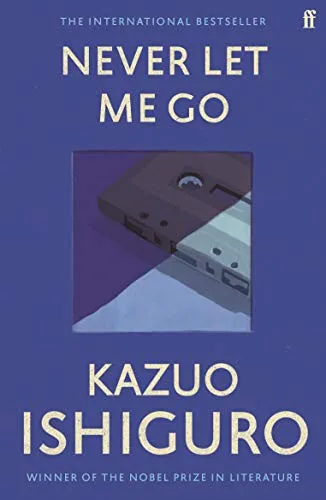
Kazuo Ishiguro 2005
In one of the most acclaimed and strange novels of recent years, Kazuo Ishiguro imagines the lives of a group of students growing up in a darkly skewered version of contemporary England. Narrated by Kathy, now 31, Never Let Me Go hauntingly dramatises her attempts to come to terms with her childhood at the seemingly idyllic Hailsham School, and with the fate that has always awaited her and her closest friends in the wider world. A story of love, friendship and memory, Never Let Me Go is charged throughout with a sense of the fragility of life.
View book1 want to read
-
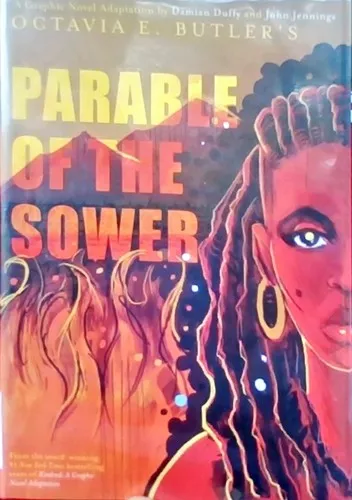
Octavia E. Butler 1993
"In the year 2024, the country is marred by unattended environmental and economic crises that lead to social chaos. Lauren Olamina, a preacher's daughter living in Los Angeles, is protected from danger by the walls of her gated community. However, in a night of fire and death, what begins as a fight for survival soon leads to something much more: a startling vision of human destiny . . . and the birth of a new faith."--
-
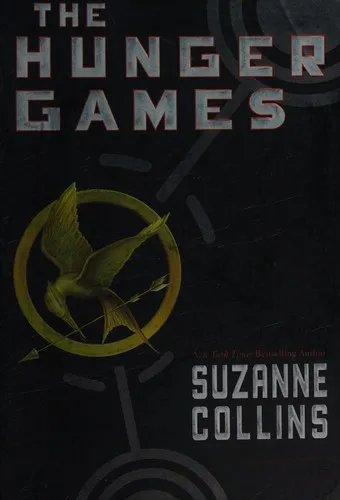
Suzanne Collins 2008
In a future North America, where the rulers of Panem maintain control through an annual televised survival competition pitting young people from each of the twelve districts against one another, sixteen-year-old Katniss's skills are put to the test when she voluntarily takes her younger sister's place.
-
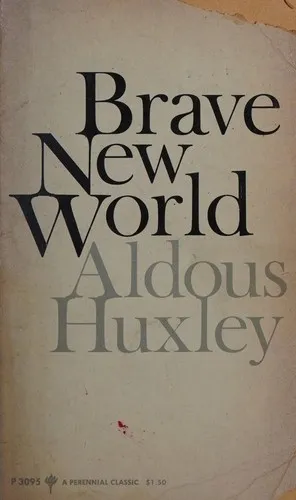
Aldous Huxley 2004
Aldous Huxley's "Brave New World" presents a chilling vision of a dystopian future characterized by the pervasive influence of technology and state control over individuals. Written in 1932, this novel employs a satirical yet cautionary tone, utilizing rich, ironic prose to explore the loss of individuality in a society driven by consumerism, genetic engineering, and hedonism. Huxley crafts a technologically advanced world where human beings are conditioned from birth to embrace a predetermined social order, raising profound ethical questions about freedom, happiness, and the cost of progress. Aldous Huxley, a member of a prominent scientific family, was deeply influenced by both the Enlightenment ideals of progress and the emerging anxieties of the early 20th century. His exposure to the early theories of psychology, biology, and the effects of totalitarianism shaped his critical perspective on modern civilization. "Brave New World" serves as both a product of its time and a prophetic warning, reflecting Huxley's concerns about the dehumanizing potential of technological advancement and the inherent risks of sacrificing individuality for societal stability. This landmark work is an essential read for anyone interested in the interplay between technology, society, and human values. Huxley's masterful narrative invites readers to reflect on the moral dilemmas of contemporary life, making it a timeless exploration of the balance between progress and humanity. Engage with "Brave New World" to apprehend its enduring relevance in an age increasingly dominated by technological advancement. In this enriched edition, we have carefully created added value for your reading experience: - A comprehensive Introduction outlines these selected works' unifying features, themes, or stylistic evolutions. - The Author Biography highlights personal milestones and literary influences that shape the entire body of writing. - A Historical Context section situates the works in their broader era—social currents, cultural trends, and key events that underpin their creation. - A concise Synopsis (Selection) offers an accessible overview of the included texts, helping readers navigate plotlines and main ideas without revealing critical twists. - A unified Analysis examines recurring motifs and stylistic hallmarks across the collection, tying the stories together while spotlighting the different work's strengths. - Reflection questions inspire deeper contemplation of the author's overarching message, inviting readers to draw connections among different texts and relate them to modern contexts. - Lastly, our hand‐picked Memorable Quotes distill pivotal lines and turning points, serving as touchstones for the collection's central themes.
View book1 want to read
-
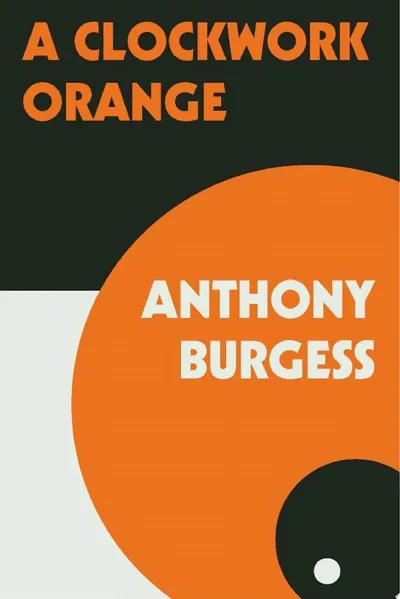
Anthony Burgess 1972
One of Esquire's 50 Best Sci-Fi Books of All Time "A brilliant novel.... [A] savage satire on the distortions of the single and collective minds."— New York Times In Anthony Burgess's influential nightmare vision of the future, where the criminals take over after dark, the story is told by the central character, Alex, a teen who talks in a fantastically inventive slang that evocatively renders his and his friends' intense reaction against their society. Dazzling and transgressive, A Clockwork Orange is a frightening fable about good and evil and the meaning of human freedom. This edition includes the controversial last chapter not published in the first edition, and Burgess's introduction, "A Clockwork Orange Resucked."
-
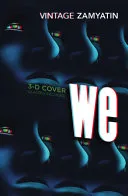
Yevgeny Zamyatin 1959
As relevant today as when it was first published, We is the first modern dystopian novel which inspired both Nineteen Eighty-Four and Brave New World. The citizens of the One State live in a condition of 'mathematically infallible happiness'. D-503 decides to keep a diary of his days working for the collective good in this clean, blue city state where nature, privacy and individual liberty have been eradicated. But over the course of his journal D-503 suddenly finds himself caught up in unthinkable and illegal activities - love and rebellion. Banned on its publication in Russia in 1921, We is the first modern dystopian novel and a satire on state control that has once again become chillingly relevant.