

The 10 books on this stack
-
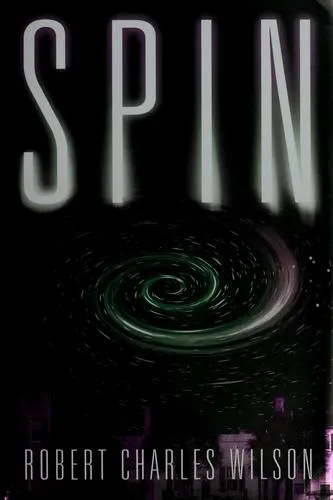
Spin
Robert Charles Wilson · 2005
One night in October when he was ten years old, Tyler Dupree stood in his back yard and watched the stars go out. They all flared into brilliance at once, then disappeared, replaced by a flat, empty black barrier. He and his best friends, Jason and Diane Lawton, had seen what became known as the Big Blackout. It would shape their lives. The effect is worldwide. The sun is now a featureless disk - a heat source, rather than an astronomical object. The moon is gone, but tides remain. Not only have the world's artificial satellites fallen out of orbit, their recovered remains are pitted and aged, as though they'd been in space far longer than their known lifespans. As Tyler, Jason, and Diane grow up, space probe reveals a bizarre truth: The barrier is artificial, generated by huge alien artifacts. Time is passing faster outside the barrier than inside - more than a hundred million years per day on Earth. At this rate, the death throes of the sun are only about forty years in our future. Jason, now a promising young scientist, devotes his life to working against this slow-moving apocalypse. Diane throws herself into hedonism, marrying a sinister cult leader who's forged a new religion out of the fears of the masses. Earth sends terraforming machines to Mars to let the onrush of time do its work, turning the planet green. Next they send humans...and immediately get back an emissary with thousands of years of stories to tell about the settling of Mars. Then Earth's probes reveal that an identical barrier has appeared around Mars. Jason, desperate, seeds near space with self-replicating machines that will scatter copies of themselves outward from the sun - and report back on what they find. Life on Earth is about to get much, much stranger.
-
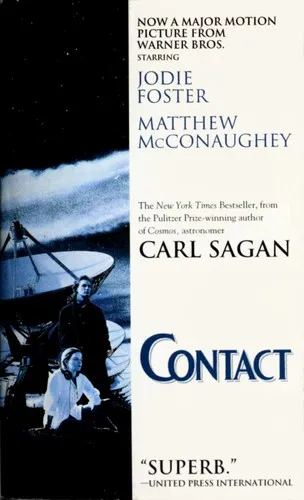
Contact
Carl Sagan · 1986
In the year 1999 a multinational team of astronauts sets out to discover the secrets of the universe.
-

Roadside Picnic
Strugatsky · 1978
The Strugatsky brothers' poignant and introspective novel of first contact that inspired the classic film Stalker Red Schuhart is a stalker, one of those strange misfits who are compelled by some unknown force to venture illegally into the Zone and, in spite of the extreme danger, collect the mysterious artefacts that the alien visitors left scattered around. His life is dominated by the Zone and the thriving black market in the alien products. Even the nature of his daughter has been determined by the Zone. And it is for her that Red makes his last, tragic foray into the hazardous and hostile depths. Readers can't stop thinking about Roadside Picnic: 'A story of a horrific yet fascinating place, a story of an ordinary and unlikable man just trying to get by, a philosophical interlude on humanity and its significance or lack thereof , of greed and wonder, and the fever dream of the soul scream. It still speaks to me ' Goodreads reviewer, ⭐ ⭐ ⭐ ⭐ ⭐ 'Such an intriguing setting for me, such an unusual take on alien interaction ' Goodreads reviewer, ⭐ ⭐ ⭐ ⭐ 'It is a thought-provoking, hard-to-put down masterpiece , most probably the best introduction to Soviet science fiction. A must read for any sci-fi fan' Goodreads reviewer, ⭐ ⭐ ⭐ ⭐ ⭐ 'A fantastic and creative exploration of what first contact might be like' Goodreads reviewer, ⭐ ⭐ ⭐ ⭐ ⭐ 'The tone of the book is akin to that of some noir works, dark, gritty, getting darker and grittier as the tale wears on . . . Like many great books, the meaning of the ending is left up to the reader' Goodreads reviewer, ⭐ ⭐ ⭐ ⭐ ⭐ 'A beautifully depressive and wonderfully atmospheric science fiction novel about life on Earth after an alien "Visitation" that leaves humans with more questions than answers . . . Once I started reading it today, I couldn't stop. The story captured my heart and held my attention' Goodreads reviewer, ⭐ ⭐ ⭐ ⭐ ⭐ 'This is the sort of book that you read and then immediately feel the need to lend it to someone you know so that they can experience and enjoy it themselves . . . I was truly astonished -by both the poignancy and the deceptive(?) simplicity of this relatively short novel' Goodreads reviewer, ⭐ ⭐ ⭐ ⭐ ⭐
-
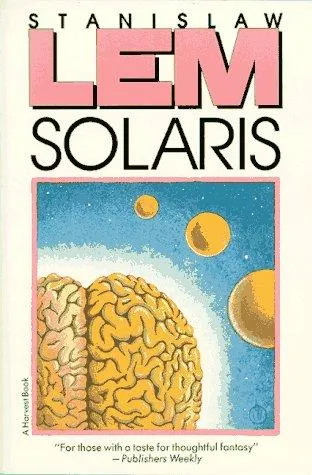
Solaris
Stanisław Lem · 2002
Kris Kelvin lands on the space station Solaris only to face a cruel miracle.
-
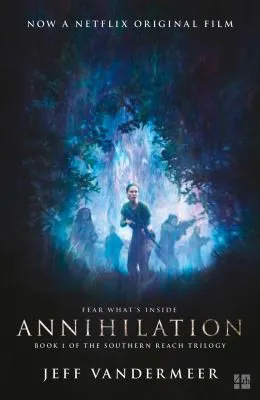
Annihilation
Jeff VanderMeer · 2014
Area X has been cut off from the rest of the continent for decades. Nature has reclaimed the last vestiges of human civilization. The first expedition returned with reports of a pristine, Edenic landscape; all the members of the second expedition committed suicide; the third expedition died in a hail of gunfire as its members turned on one another; the members of the eleventh expedition returned as shadows of their former selves, and within months of their return, all had died of aggressive cancer. This is the twelfth expedition. Their group is made up of four women: an anthropologist, a surveyor, a psychologist--the de facto leader--and a biologist, who is our narrator. Their mission is to map the terrain and collect specimens, to record all their observations, scientific and otherwise, of their surroundings and of one another and, above all, to avoid being contaminated by Area X itself. They arrive expecting the unexpected, and Area X delivers--they discover a massive topographic anomaly and life forms that surpass understanding--but it's the surprises that came across the border with them and the secrets the expedition members are keeping from one another that change everything.
View book1 want to read
-
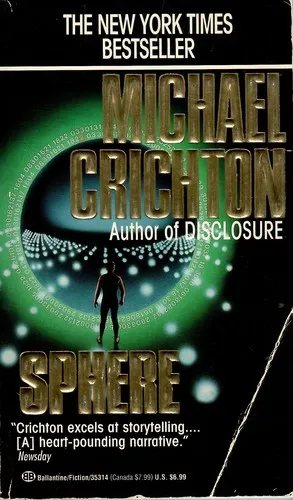
Sphere
Michael Crichton · 1987
From the author of Jurassic Park, Timeline, and Congo comes a psychological thriller about a group of scientists who investigate a spaceship discovered on the ocean floor. In the middle of the South Pacific, a thousand feet below the surface, a huge vessel is unearthed. Rushed to the scene is a team of American scientists who descend together into the depths to investigate the astonishing discovery. What they find defies their imaginations and mocks their attempts at logical explanation. It is a spaceship, but apparently it is undamaged by its fall from the sky. And, most startling, it appears to be at least three hundred years old, containing a terrifying and destructive force that must be controlled at all costs.
-
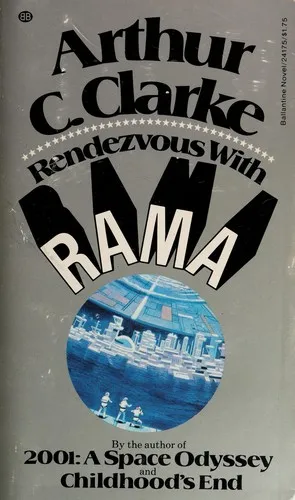
Rendezvous with Rama
Arthur C. Clarke · 1953
The multi-award-winning SF masterpiece from one of the greatest SF writers of all time Rama is a vast alien spacecraft that enters the Solar System. A perfect cylinder some fifty kilometres long, spinning rapidly, racing through space, Rama is a technological marvel, a mysterious and deeply enigmatic alien artefact. It is Mankind's first visitor from the stars and must be investigated ... Winner of the HUGO AWARD for best novel, 1974 Winner of the NEBULA AWARD for best novel, 1973 Winner of the JOHN W. CAMPBELL AWARD for best novel, 1974 Winner of the BSFA AWARD for best novel, 1973
-
2001
Arthur C. Clarke · 1994
From the savannas of Africa at the dawn of mankind to the rings of Saturn as man ventures to the outer rim of our solar system, 2001: A Space Odyssey is a journey unlike any other. This allegory about humanity’s exploration of the universe—and the universe’s reaction to humanity—is a hallmark achievement in storytelling that follows the crew of the spacecraft Discovery as they embark on a mission to Saturn. Their vessel is controlled by HAL 9000, an artificially intelligent supercomputer capable of the highest level of cognitive functioning that rivals—and perhaps threatens—the human mind. Grappling with space exploration, the perils of technology, and the limits of human power, 2001: A Space Odyssey continues to be an enduring classic of cinematic scope.
-
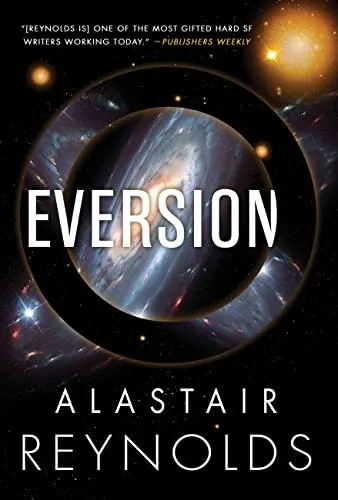
Eversion
Alastair Reynolds · 2022
Eversion is a superb, original Gothic SF novel. A small group of intrepid explorers are in search of a remote and mysterious artefact. It's a well-funded expedition, well organised, which is lucky as they're sailing north of Bergen on the schooner Demeter , searching for a narrow inlet which will lead them to a vast uncharted lake - and their goal-- Until disaster strikes. Doctor Silas Coade wakes from disturbing dreams, on the steamship Demeter , in pursuit of an extraordinary find almost too incredible and too strange to believe, secreted within a lagoon in the icy inlets of Patagonia. But as they come in sight of their prize he and the crew see they are not the first to come so far: there is a wreck ahead, and whatever ruined it may threaten them as well-- Shaking off his nightmares, Doctor Silas Coade joins his fellow exploders on the deck of the zeppelin Demeter and realises something has already gone dangerously wrong with their mission. If any of them are to survive, then he will have to take the exploration - and their lives - into his own hands . . .
-
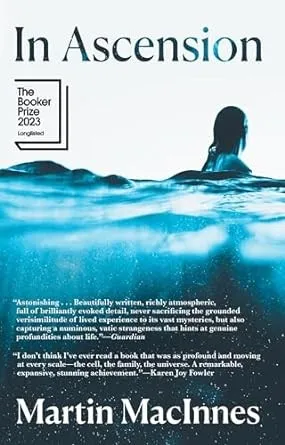
In Ascension
Martin MacInnes · 2023
Leigh grew up in Rotterdam, drawn to the waterfront as a refuge from her unhappy home life and volatile father. Enchanted by the marine world of her childhood, she excels in postgraduate research on ancient algae. When an unfathomable vent appears in the mid-Atlantic floor, Leigh joins the investigating team; what she finds there will change her life forever. Around the same time, a trio of engineers, unknown to each other, make a seismic breakthrough in rocket propulsion, announcing an almost limitless era of space exploration. Billions of dollars is poured into projects, and Leigh's classified research on the ocean vent sees her recruited to develop an experimental food source for off-world travel. From her base in the Mojave desert, she's drawn further into the space agency's work, where she learns of a series of anomalies suggesting a beacon sent from the far side of the solar system.